
OD&A’s On the Record with Virginia Maloney
The New York City Council Member and chair of the Economic Development Committee on her first year in office.
By Ralph R. Ortega
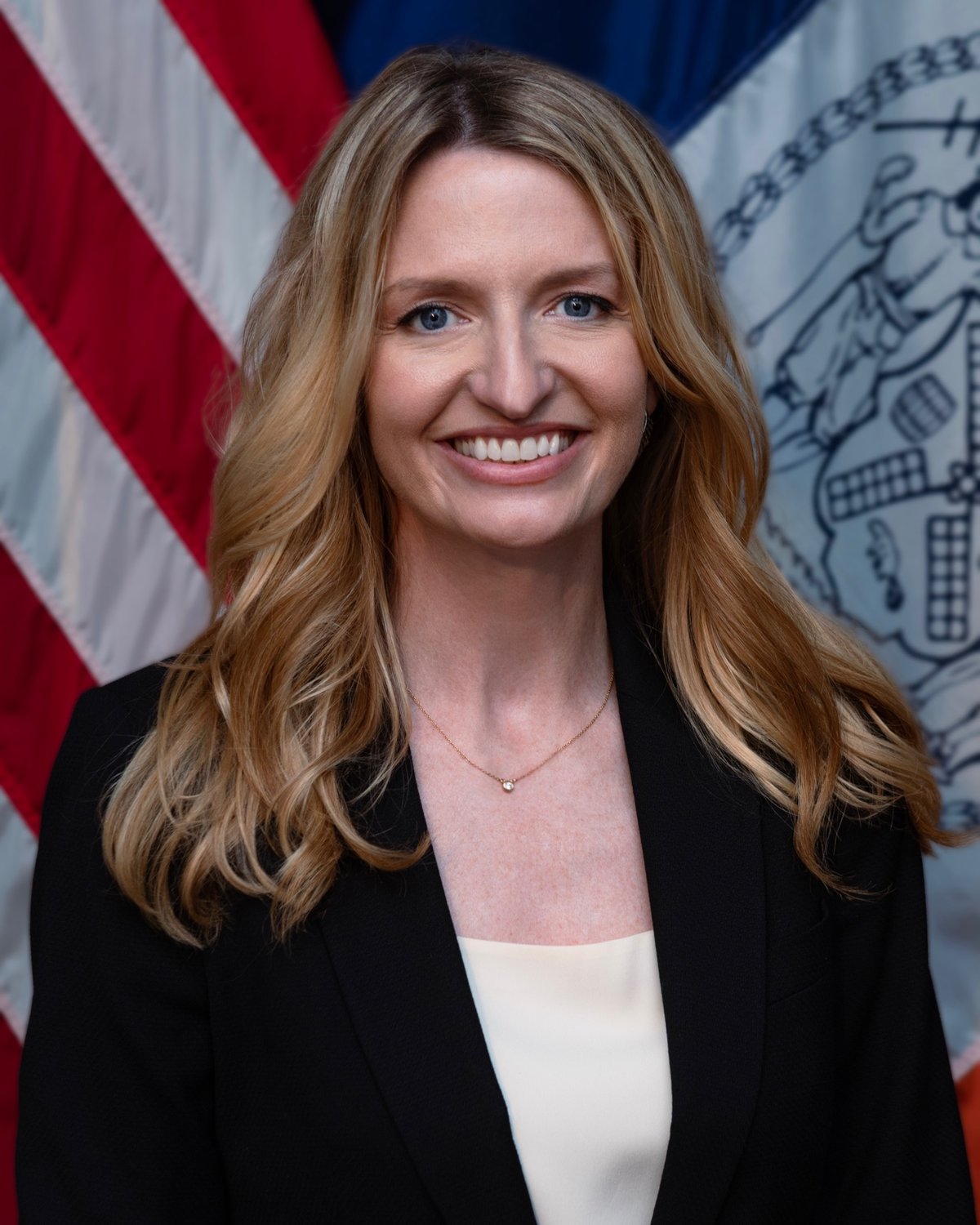
New York City Council Member Virginia Maloney is finishing her first year in office while serving as chair of the Economic Development Committee. In that role, she has been a bridge between City Hall and Albany.
Now, with less than two months before the start of the next Legislative Session, the state faces roughly a $32 billion budget gap. That means lawmakers are in for a fight over what gets paid and what doesn't.
O'Donnell & Associates' “On the Record” caught up with Maloney to discuss the Council's economic development priorities for Albany as Session kicks off. She touches on a wide range of issues, including AI and what barriers small businesses, especially those run by women and people of color, face in adopting the new technology.
This interview has been edited for length and clarity.
As chair of the Economic Development Committee in your first year, what does New York City most need to do to compete for jobs, investment, and growth right now?
As a native New Yorker, I’m a “New York or nowhere” person. Our city has the talent, capital, world-class universities, and people who will do just about anything to make it here. For our city to continue to succeed economically, we need to focus on three things.
First, housing. You can’t have a conversation about economic development without talking about affordability. If young professionals, working families, and the people powering our economy can’t afford to live here, we have a fundamental competitiveness problem. I introduced Int 066, the Shared City Act, to address one part of the supply issue.
Second, we need to be much more aggressive about marketing New York and using economic incentives strategically. Businesses have a choice about where they invest, hire, and put down roots. We can’t take for granted that they’ll choose New York. We need to be sending a very clear message: “New York City is open for business!”
And third, government needs to be a partner in that growth. We all know the saying, “If you can make it here, you can make it anywhere.” Well, I think New York makes the “making it” part unnecessarily difficult sometimes. Government needs to be helping businesses by not getting in the way. We need faster permitting, less red tape, and a workforce that can keep pace with the industries of tomorrow by developing their skillsets.
Our job at City Hall is to make sure the next great company can start here, grow here, and actually afford to stay here.
You spoke at a recent Citizens Budget Commission breakfast about AI companies being founded in New York City. What should the city be doing to keep those companies here and help them grow, rather than losing them to other cities?
New York is already the second largest (some would argue largest!) technology hub in the country, right behind the Bay Area. New York City has benefited from the AI boom, both within the financial sector but also with technology jobs growing here. Anthropic just made a massive bet on Hudson Square, and I love seeing that kind of investment in our city, but how do we make sure the next Anthropic actually starts here and then stays here?
When I was at NYCEDC in 2012, the city faced a similar challenge. California’s tech companies were booming, and city officials here were trying to create “Silicon Alley” to compete with Silicon Valley. We tackled some of the core challenges — talent, infrastructure, space, capital — with solutions to create a more robust tech ecosystem. It's time to bring that energy back.
On my Substack, I write about how New York City needs to be creating more centers of gravity for entrepreneurs. We should be getting creative: affordable space for founders, easier access to investors, partnerships with our universities and fewer bureaucratic headaches when companies are ready to grow.
I'm thrilled when a major tech company opens a New York office, but I want the HQ. I want the founders, the jobs, and the next generation of unicorn startups. Let’s make New York the place they wouldn't dream of leaving.
You've run AI-literacy training for District 4 businesses with the Manhattan Chamber of Commerce and Welcome to Chinatown, on the idea that jobs won't be taken by AI but by people who are AI-literate. What would it take to scale that kind of training citywide?
I am a big advocate for AI literacy, and for New Yorkers to start to understand and use these products. AI is not going to take your job, but someone who knows how to use it might. The future of work includes technology, and I want New Yorkers to have that competitive edge!
A restaurant owner on Second Avenue doesn't need a crash course in LLMs. They want to know how AI can help manage inventory, build their social media profile to attract customers, or save a few hours a week. We've been bringing that kind of hands-on training to businesses in District 4 with the Manhattan Chamber of Commerce and Welcome to Chinatown.
City Hall should be partnering with borough-specific Chambers of Commerce, BIDs, and employers to build industry-specific AI training and reskilling programs. Organizations like Pursuit are already showing how to connect AI skills to jobs. I would like to see New York City's workforce be the most AI-literate in the country.
We have also done similar training open to all constituents with BetaNYC. Every constituent should be well-versed in both the potential benefits of AI, but also the risks, like privacy, data protection, and scams. The best defense against negative implications of AI is education.
You also flagged access for small businesses, women, and people of color. Where are the biggest barriers for them in getting the tools, capital, and contracts that come with this new economy?
We're already seeing gaps in adoption among women, people of color, and small businesses. I’m focused on the implications of that five or ten years from now. The people who learn to leverage AI today will have a competitive advantage in the workplace and will increasingly be the people leading companies and making investment decisions tomorrow. Government must have a role in expanding access to these tools and providing practical training.
At NYCEDC, my portfolio focused on closing the digital divide and building out free public wifi access across the five boroughs. The same thinking needs to be brought to AI tech, which may not be accessible to all New Yorkers. I firmly believe that there are great benefits to be gained from using this tech, but it should not be just the big tech companies who are able to reap the benefits. I want the benefits of AI to reach the small business owner on Second Avenue just as much as the tech executive in Silicon Valley.
Further, as a product manager at Meta, I learned pretty quickly that who's in the room when a product gets built has a lot to do with whose problems actually get solved. And with AI, we're talking about decisions that could affect billions of people. The more diverse voices we have in shaping AI, the better chance we have of catching existing biases before they're baked into the next generation of tools.
Your first hearing as chair looked at capturing the full economic benefits of the 2026 FIFA World Cup for small businesses and neighborhoods, not just major institutions. What did that teach you about how the city should handle big economic moments?
The World Cup was a reminder of New York's ability to pull off something on a global scale. The city estimates it generated $2 billion in economic activity, which is incredible, but we also spent roughly $90 million in public funds. New Yorkers deserve to know what they got for that investment. Our hearings drove home the importance of planning ahead with local businesses, tracking where the money goes, and measuring the impact beyond the big headline numbers.
The key takeaway — for the next big event, we need to start earlier. There were a lot of wins with this Cup, but the transparency and planning should be in place months in advance before the next major event. I'd like to see the city invest in a playbook for hosting future major events. We need to engage our BIDs and chambers earlier, refine our forecasting, and better coordinate our transportation, tourism, and small business strategies.
Looking at workforce development statewide, what is the one thing Albany should do next — in training, funding, or policy — that would actually help New Yorkers get and keep good jobs?
Talent and workforce development is essential. Albany should make it a whole lot easier to change careers without starting your life over. Gov. Hochul has made great progress with SUNY and CUNY Reconnect, and I'd love to see us build on that with more paid training and incentives for employers to upskill their own workers. AI is changing jobs in real time. We should be helping New Yorkers learn new skills while they're still earning a paycheck, rather than waiting until their jobs disappear.
About Ralph R. Ortega
Ralph has been a reporter and editor for several major newspapers and magazines for more than 30 years, and is now vice president of public affairs at O’Donnell & Associates.
Most recently, he was the editor-in-chief of the award-winning City & State NY magazine. At City & State, Ralph managed a team of talented journalists covering the downfall of former New York Gov. Andrew Cuomo, the ascent of current Gov. Kathy Hochul, New York City Mayor Eric Adams’ election campaign and later his administration, as well as the election of Mayor Zohran Mamdani. In his role, Ralph became a well-known player in New York’s political world, emceeing, moderating, and conducting interviews at City & State events. He also wrote a weekly column that focused on policy, transportation, and advocated for greater Latino representation at City Hall and in city government. Read Ralph’s full bio and contact information.