
On the record with Mamdani’s pied-à-terre tax
An explainer on how the New York City mayor gets to tax the rich.
By Ralph R. Ortega
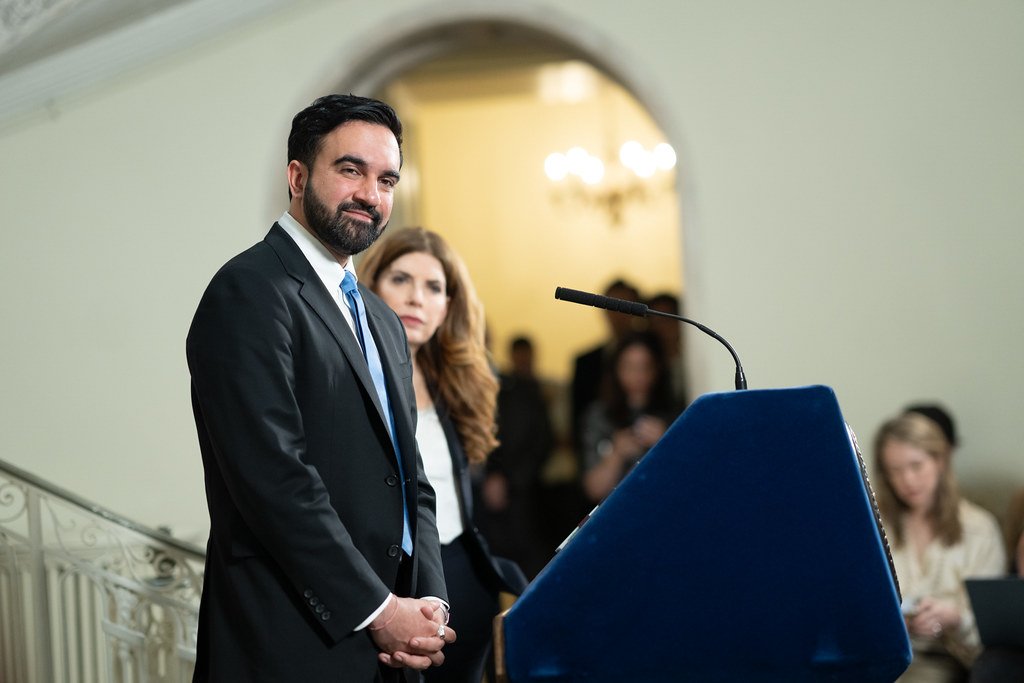
The rollout of New York City Mayor Zohran Mamdani’s pied-à-terre tax has had a bumpy start.
It faced an outcry from owners of homes valued at $5 million or more, especially after they were asked to prove their residency, and then was hit by a lawsuit attempting to derail its execution.
Now the mayor’s plan awaits a City Council hearing to be held by Speaker Julie Menin this week, an acknowledgment that there are concerns about the levy and its rollout.
However, none of the angst, so far, has been focused on the main point for creating the tax: to generate revenue for New York City by imposing a levy on expensive second homes that can help plug budget deficits. And while it accomplishes Mamdani’s campaign promise of “taxing the rich,” and with Gov. Kathy Hochul’s blessing, its small scope affects only an estimated 0.4% to 0.5% of the city’s residential properties.
“If this is the full sum of Mamdani’s taxing the rich, the rich can be very happy,” David Schleicher, the Walter E. Meyer Professor of Property and Urban Law at Yale Law School, said in a telephone interview with O’Donnell & Associates’ “On the Record.” “A bunch of other jurisdictions have done something similar. I don’t know whether it’s the best public policy in the whole world, but it is a pretty limited tax increase.”
Gov. Hochul announced her support for the pied-à-terre tax in April, saying that it would raise about $500 million and ensure that the owners of luxury second homes, who don’t live in the city or pay income taxes to the city, pay their “fair share” for essential services.
A fiscal note prepared by city Comptroller Mark Levine’s office that used previous pied-à-terre proposals to estimate potential revenues confirmed the tax would raise about $500 million from a little over 11,200 properties. However, the projections drop to between $340 million and $380 million when exclusions for rental units and “behavioral changes” resulting from the tax are factored in.
Despite the revenue potential and minimal impact on the city’s housing stock, the criticisms and concerns are no surprise. New York has unsuccessfully attempted to impose a pied-à-terre tax in the past. Headwinds from real estate developers quashed a legislative proposal to impose a tax on luxury second homes in 2019, instead substituting a one-time fee on real estate transactions exceeding $3 million.
This time around, however, Mamdani’s pied-à-terre tax comes after the notion of taxing the wealthy has begun to gain momentum nationally, which means all eyes are on whether the mayor’s tax will actually happen. Mamdani celebrated the start of the rollout of the tax in an Instagram post, saying, “When I ran for mayor, I said I was going to tax the rich … Well today, we are taxing the rich,” as he stood outside hedge fund manager Ken Griffin’s apartment building where the billionaire paid $238 million for a penthouse apartment. The mayor went on to note that the tax was for the “richest of the rich.”
Rumblings from homeowners began almost immediately after the city sent out 17,000 notices to those owners the city believed were subject to the tax. It was followed by an outcry over the publication of a property roll listing of 900,000 properties that could be subject to the levy. Even though the data on the listing was all from readily available public information, outing the homeowners in a climate increasingly hostile toward New York’s wealthy was not appreciated.
“It was obviously thoughtless to publicize all that personal information in a way that made people potential targets. It is public info, but no one ever focused on it before,” Kathy Wylde, the former longtime president and CEO of the nonprofit Partnership for New York City, told O’Donnell & Associates’ “On the Record,” via email.
“Honestly,” she added, “a preferred tax rate for resident owners is not unusual. If this had been played that way, it would be a non-issue.”
Homeowners also complained about the Sept. 18 deadline for seeking an exemption, saying it was too short a window for completing their application.
Given its unpopularity with the homeowners, it was only a matter of time before the tax would face its first legal challenge.
Attorney Randy Mastro, the city’s former first deputy mayor under Eric Adams, filed a lawsuit on behalf of three Staten Island homeowners, challenging the rollout of the tax. The case, filed on Aug. 7, asked the court to invalidate the notices sent out about the tax to homeowners the city believed were subject to it, retract the property roll, and suspend the Sept. 18 deadline for anyone seeking an exemption.
Staten Island Judge Wayne Ozzi issued a temporary restraining order on the rollout of the tax pending an Aug. 31 hearing. The order, however, was almost immediately halted after the Mamdani administration moved to appeal.
Mastro, already legally challenging the city on its rent increase freeze of 1 million rent-stabilized apartments (which was another Mamdani campaign promise), argued in the pied-à-terre lawsuit that the administration “arbitrarily and capriciously foisted onto New York City residents the burden of proving they are not subject to the Surcharge,” according to court documents. He was not immediately available to speak with “On the Record.”
The case has drawn national attention, including that of President Donald Trump. Trump, in a Truth Social post, said that he was going to see if federal intervention was possible to “avert this disaster – before it’s too late.”
About Ralph R. Ortega
Ralph has been a reporter and editor for several major newspapers and magazines for more than 30 years, and is now vice president of public affairs at O’Donnell & Associates.
Most recently, he was the editor-in-chief of the award-winning City & State NY magazine. At City & State, Ralph managed a team of talented journalists covering the downfall of former New York Gov. Andrew Cuomo, the ascent of current Gov. Kathy Hochul, New York City Mayor Eric Adams’ election campaign and later his administration, as well as the election of Mayor Zohran Mamdani. In his role, Ralph became a well-known player in New York’s political world, emceeing, moderating, and conducting interviews at City & State events. He also wrote a weekly column that focused on policy, transportation, and advocated for greater Latino representation at City Hall and in city government. Read Ralph’s full bio and contact information.